Arizona, Arizona Travel, Exploration Guide, Family Travel, Field Guide, Field Notes, Living, Things-to-Do, Travel Tips

Butcher Jones Trail Guide: What 11,000 Hikers Reveal About Saguaro Lake | Tonto National Forest

Part of the Paths & Patterns Series

Arrived at Saguaro Canyon at 10 AM and the first thing you notice isn’t the trailheadโ€”it’s the parking lot choreography. Vehicles circling like vultures, waiting for hikers to pack up and leave, drivers nudging into spaces as quickly as possible. We circled once before surrendering to the overflow lot we’d initially passed on the way in. Immediate evidence this trail is loved hard.
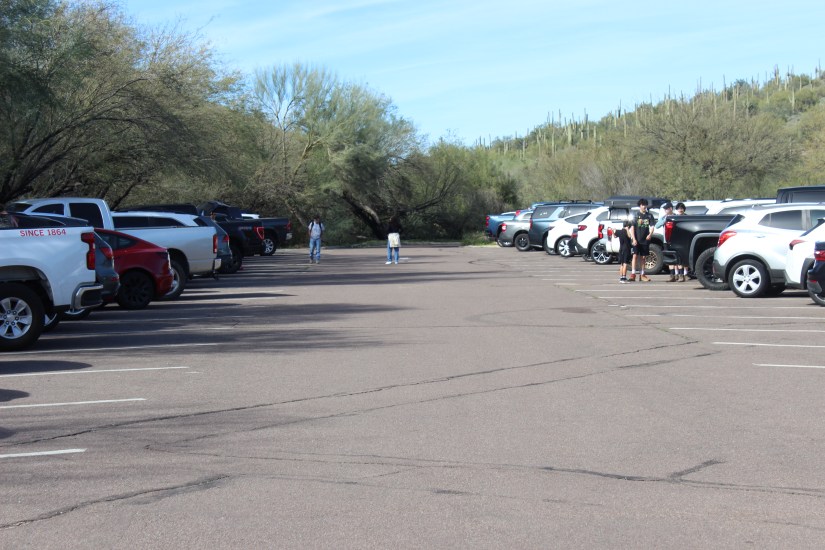
Butcher Jones Trail Parking Lot

I almost died once on a hike up South Mountain’s Holbert Trail. My sister insists I was nowhere near death, but when you’re gasping for air halfway up a 1,000-foot elevation gain with no clear sense of how you’ll make it back down, semantics don’t matter much. That was my last time hiking Holbert Trail.

Recently, I wanted to investigate Butcher Jones Trail in the Tonto National Forest. Both trails are rated moderate by AllTrails.com. The key difference? Butcher Jones has a much more forgiving elevation gain at 638 feet compared to Holbert’s punishing 1,000. But what really drew me here was the numbers: 4.7 stars from approximately 11,000 hikers. When a trail gets that much traffic and maintains that rating, I want to know howโ€”and at what cost to the ecosystem.

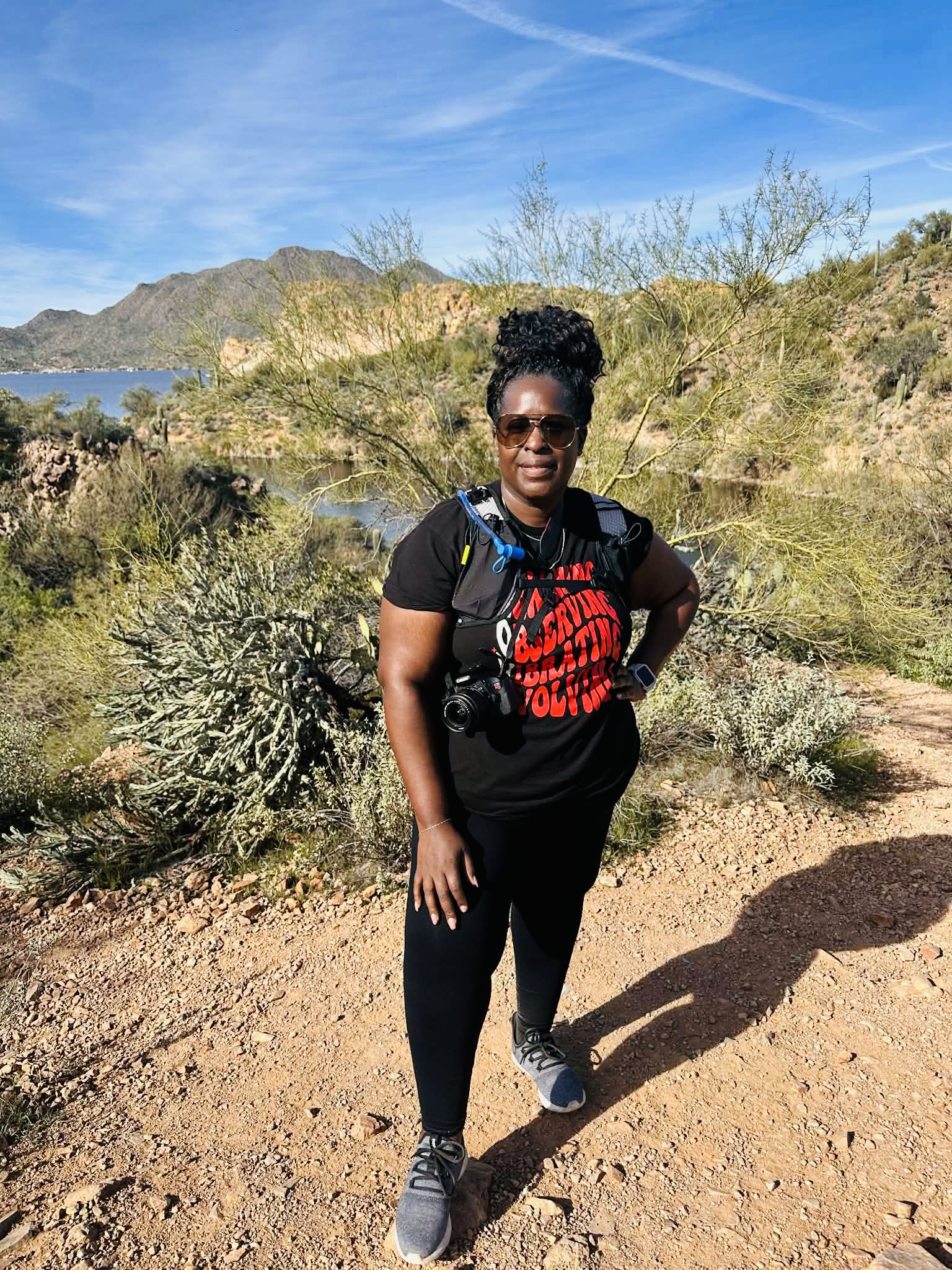
Starting the investigation with a full water pack, camera. and curiosity

THE DAM THAT CREATED SAGUARO LAKE

Butcher Jones is nestled just about an hour east of the greater Phoenix area, but the area I was about to explore didn’t exist a 100 years ago, at least not in this form. Saguaro Lake was formed by the Stewart Mountain Dam on the Salt River, built between 1928 and 1930. Once a free-flowing desert river became a reservoir serving as storage for irrigation, municipal use, and hydropower.

A Saguaro Lake Guest Ranch was built in 1927 during the construction of Stewart Mountain Dam to host workers during the build. Around 1930, once the dam was complete, a couple from Kansas purchased the land to be turned into a public use area. The transition from industrial construction site to recreation destination was complete. Fishermen came first, then hikers, thenโ€ฆ the Instagram and TikTok generation with their 11,000 AllTrails reviews.
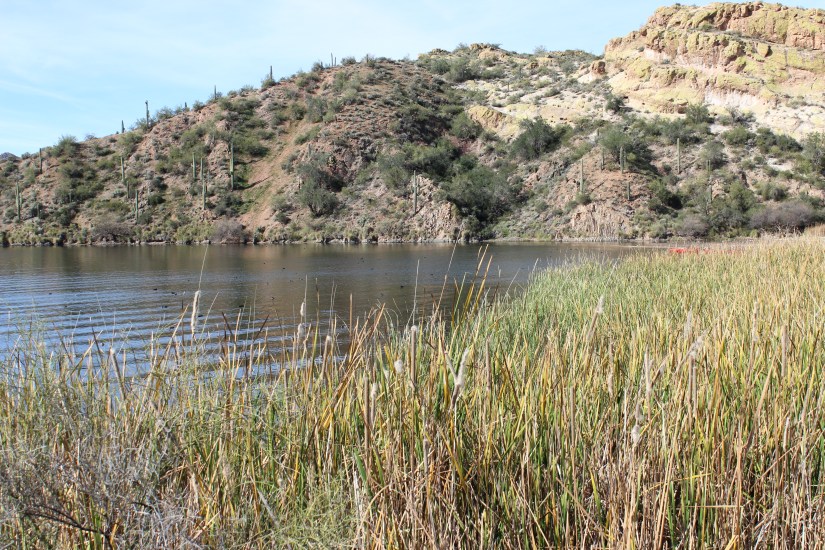
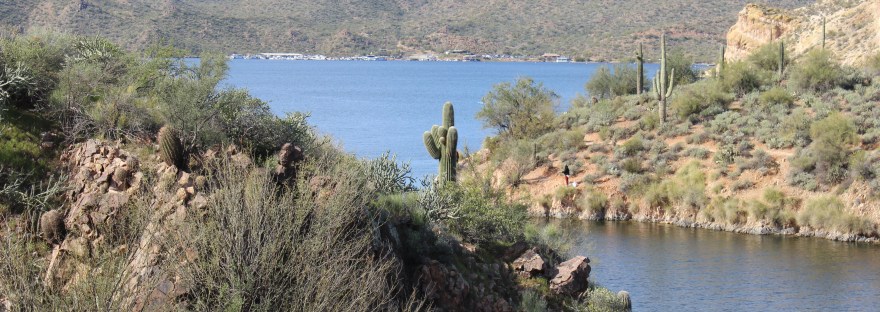
Saguaro Lake at Tonto National Forest

This trail wasn’t built for scenic overlooks or social media sunsets. It was constructed for one functional purpose: giving fishermen access to the lake. But somewhere between then and now, it became one of Tonto National Forest’s most-visited sites. The land has been responding ever since.

The wildlife and Saguaro Lake remain open to the public for fishing and hiking with an Arizona Fishing Permit from Arizona Game & Fish and/or a Tonto Forest Parking Pass.


FIRST SIGNS OF STRAIN

We fitted our water packs on our backsโ€”pre-filled with chilled water bladders, protein bars, grapes, and hand sanitizerโ€”and made our way through the bare recreational area near the lake. I took in the serene Saguaro Lake, then looked down at the ground beneath my feet: bare earth where grass once grew. This area hosts picnics, volleyball games, and serves as the launch point for fishermen entering the lake with their kayaks. The soil was packed hard, compacted by thousands of footsteps, coolers, and kayak launches.
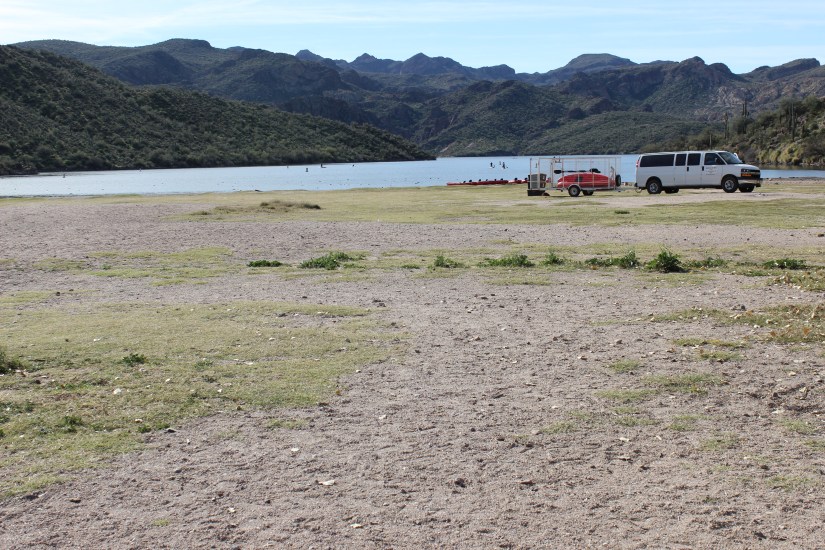
Recreation Area at Saguaro Lake

A couple passing offered the advice of figuring out something else because: “The bathrooms are in dire need of attention.” Another small indicator of infrastructure struggling to keep pace with popularity.

TIP: Find the nearest restroom closest to Butcher Jones Trail before making the final trek into the Tonto National Forest.

THE TRAIL TELLS ITS STORY

Immediately upon entry onto the trail, I noticed evidence of reroutingโ€”new pathways carved to guide hikers away from eroded sections. Trail rerouting is one of the clearest signs that Butcher Jones has endured significant erosion over the years. The original path, worn down by boots and weather.

Further along, I spotted wooden posts wrapped in barbed wireโ€”signs of an older redirect attempt. The posts stood weathered and half-buried, marking what was likely a previous effort to keep hikers on a designated path. Over time, even redirected trails can fail. Erosion doesn’t stop just because you move the route; it follows the foot traffic. These posts were evidence that this trail has been fighting the same battle for decades: how to guide thousands of hikers without letting the land wear away beneath them.
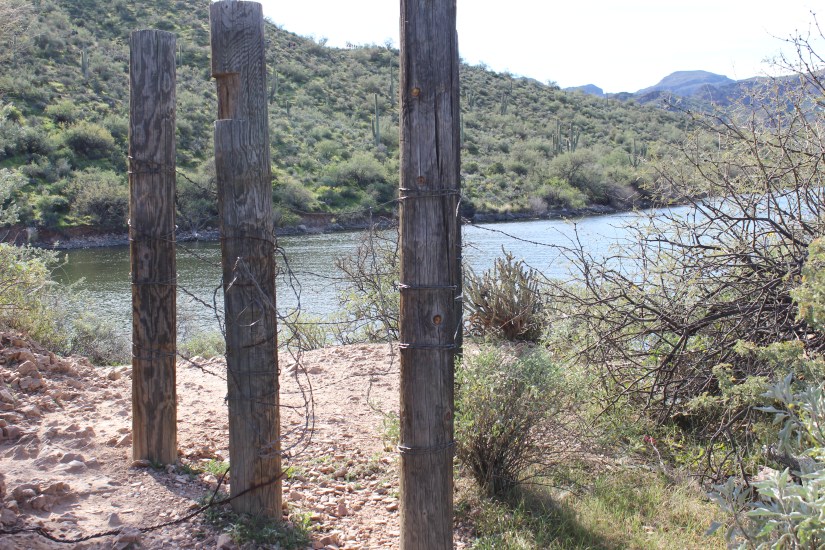
Butcher Jones Trail Posts and Wire Rerouting

As the trail descended, it became very rockyโ€”loose stones shifting underfoot, requiring careful placement of each step. But eventually it smoothed out as we headed back toward the ascent. I paused to witness Saguaro Lake from the opposite direction: beautiful and serene despite the busy day of traffic on the trail. The contrast was strikingโ€”nature’s quiet whisper alongside human activity.
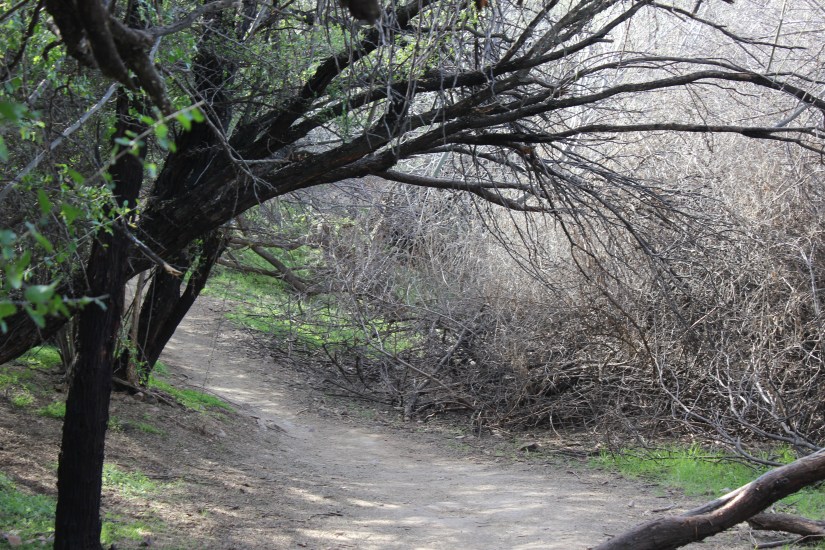
Butcher Jones Trail

There was chatter from the group behind me that they hadn’t seen the trail as busy as it was that day. Halfway through the trail, I made the decision not to attempt the full ascent. My body has changed since my breast cancer journey (more on that here), and I’m still learning what it can handle now. In a way, I’m adapting to new limits just like the Butcher Jones Trail isโ€”both of us responding to forces that reshaped us, finding new ways to function despite the wear.
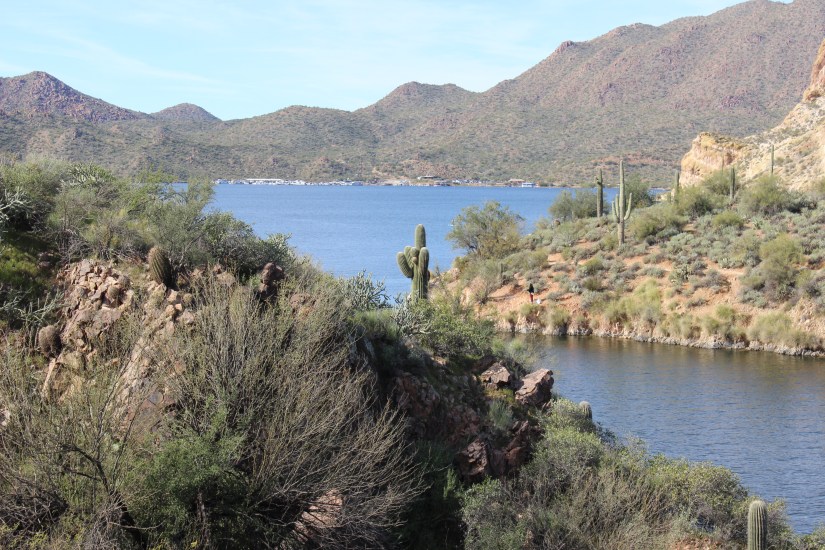
Saguaro Lake on the Back Side of Butcher Jones Trail

In Arizona, this kind of self-awareness isn’t weaknessโ€”it’s survival. The Phoenix-area trails see hundreds of rescue calls every year. Knowing when to turn back can be the difference between a good story and a cautionary tale.

WHERE DID THE WILDLIFE GO?

As we made our way back, I began to wonder why I’d seen no creatures besides ducks paddling quietly in the lake. I imagined even the smallest insect would land nearby for me to observe and capture. Nothing.
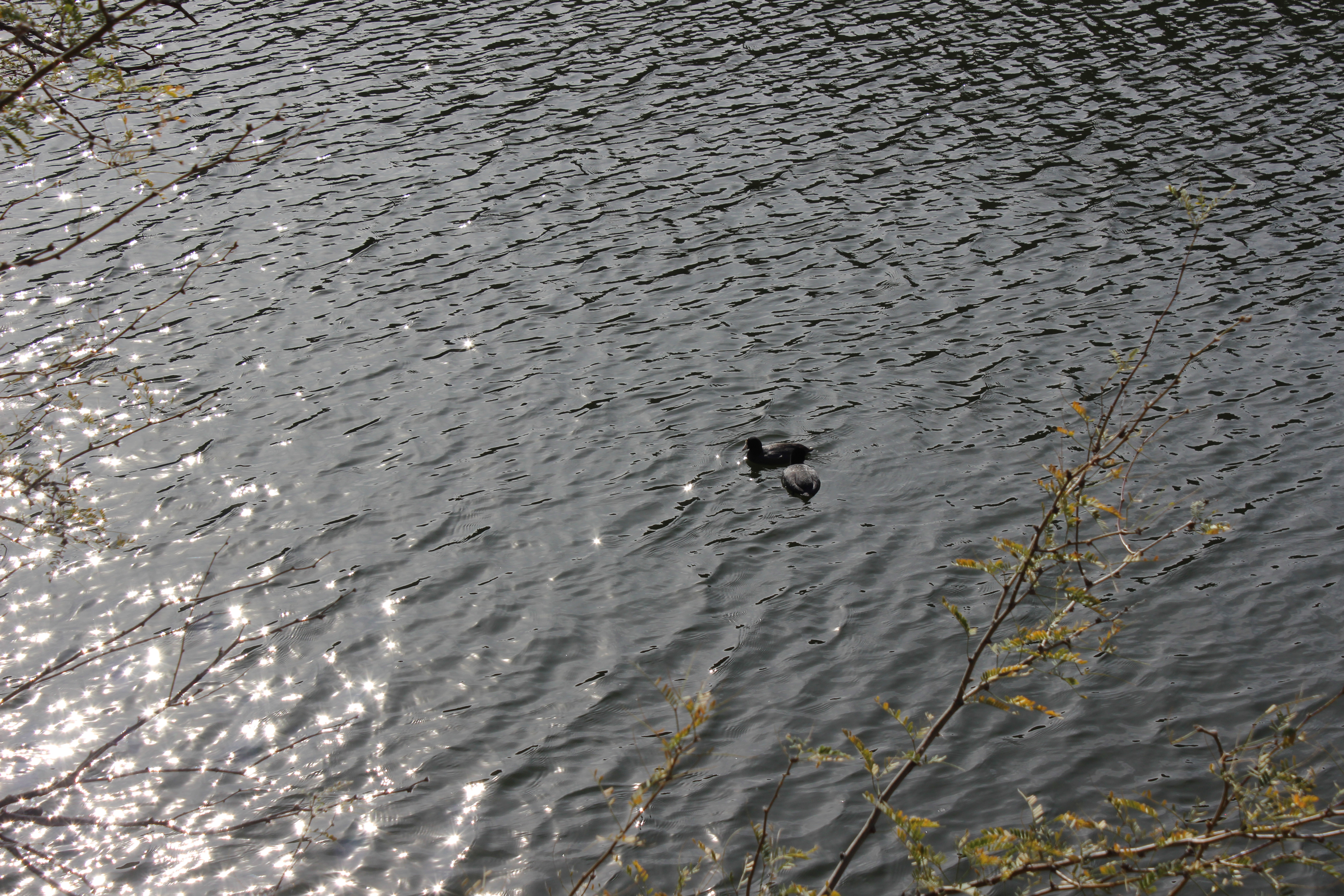
Ducks on Saguaro Lake near Butcher Jones Trail

But thenโ€”a splash of color. Vibrant yellow flowers clustered along the trail’s edge, the only bright color in a brown and green desert palette. They seemed unbothered by the foot traffic, thriving in spaces where wildlife had retreated. Apparently, the animals had learned to avoid us, these wildflowers held their ground, blooming despite of.
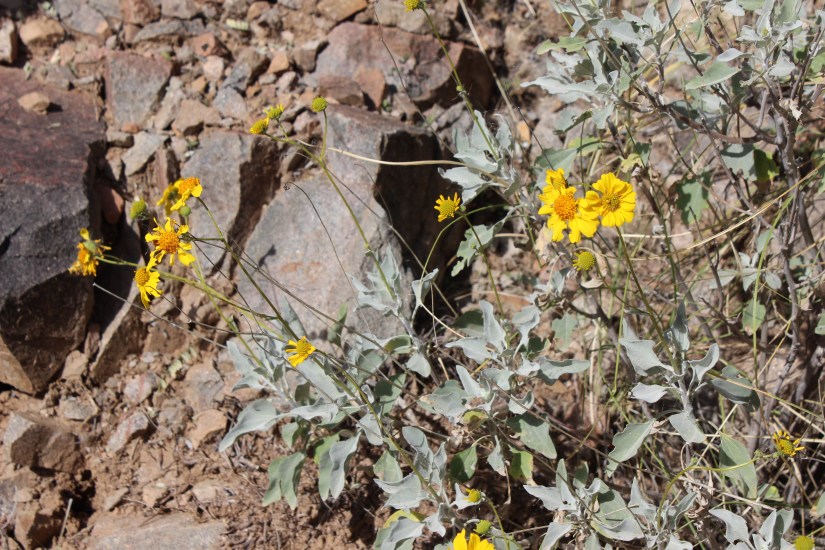
Desert Marigolds at Butcher Jones Trail

I’m left wondering if the wildlife in the area have learned to yield to pedestriansโ€”retreating during peak human hours, laying low so-to-speak, before returning to their routines when foot traffic diminishes. Desert animals are adaptive by necessity. Perhaps they’ve simply adjusted their schedules around ours.

It’s a pattern I’ve noticed before: in my whale watching investigation here, I witnessed how Navy sonar disrupted migration routes, turning whales back north when they should have been heading south. Here, on Butcher Jones, the disruption is quieter but just as real. We don’t use sonar, but our presenceโ€”our volume, our numbers, our footprintsโ€”shapes behavior just the same.

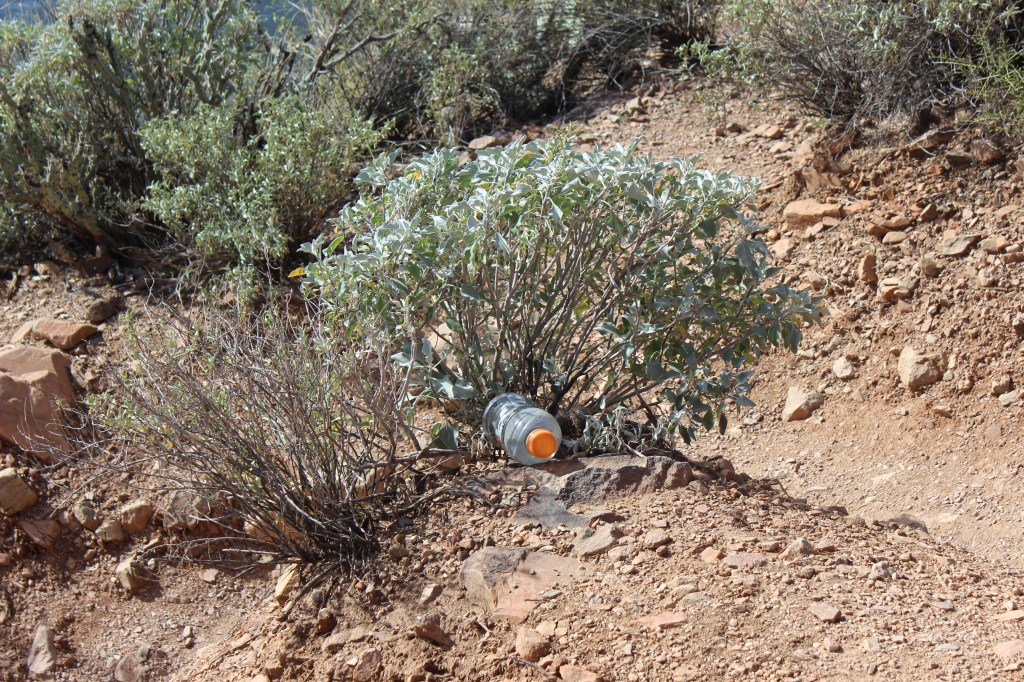
TIP: To keep the trail clean for future hikers and wildlife in the area, be sure to pack out all trash. What you leave behind doesn’t just affect the next human visitorโ€”it affects the creatures trying to reclaim their space when we’re gone.

FINAL THOUGHTS: WHAT I CAME HERE TO NOTICE

What I intended to investigate:
How a trail rated 4.7 stars by 11,000 hikers holds up under that much loveโ€”and what it costs the ecosystem.

What I didn’t expect to see:
Bare ground where grass once grew, visible before I even reached the trailhead. The pressure doesn’t start on the trail itself. It starts in the parking lot, in the recreational area, in the small infrastructure struggles that signal a place stretched beyond its original design.

What I’m still wondering:
At what point does popularity kill the thing we came to see? Butcher Jones was built for fishermen in an era when a few hundred people might visit in a season. Now it hosts thousands. The trail has been rerouted. The grass is gone. The wildlife seems absent. The bathrooms are failing miserably.

And yetโ€”it endures. The lake still reflects the canyon walls. The trail, though eroded in places, still guides us to views that take our breath away. There’s resilience here.

How I’m part of this:
I circled that parking lot. I added my footprints to the widened trail sections. I’m investigating this story while contributing to it, one more hiker among 11,000, one more person testing the boundaries of what a place can withstand. That tension matters.


Butcher Jones Trail Stats:

Distance: 4.8 miles out and back

  • Elevation Gain: 638 feet
  • Difficulty: Moderate
  • AllTrails Rating: 4.7 stars (approx. 11,000 reviews)
  • Location: Tonto National Forest, approximately 1 hour east of Phoenix
  • Permits Required: Tonto Forest Parking Pass and/or Arizona Fishing Permit (if fishing)

This is part of my Paths & Patterns seriesโ€”where I investigate how places and the people who love them shape each other. The goal isn’t to deter exploration. Explore with intention and attention, recognizing we’re all part of the story. The places we explore need us to see them, love them, and show up with curiosity and awareness.


Leave a comment

Expeditions, Exploration Guide, Family Travel, Field Notes, Living, Mission Bay, Newport Beach, San Diego, Travel Tips, Whale Watching

Whale Watching Exploration: Hidden Challenges Beneath the Waves โ€“ When Sonar Meets Migration


Whale Watching Exploration: Hidden Challenges Beneath the Waves โ€“ When Sonar Meets Migration

Whale watching is one of those rare nature experiences that can transform the way you think about the ocean. In Paths & Patterns, my series on following the rhythms of nature and uncovering the stories beneath the surface, this adventure gave me a front-row seat to the whalesโ€™ migration and the hidden pressures they face. Itโ€™s not just about sightings; itโ€™s about understanding the rhythm of migration. The delicacy of marine ecosystems, and the often unseen forces that shape these majestic giantsโ€™ journeys.

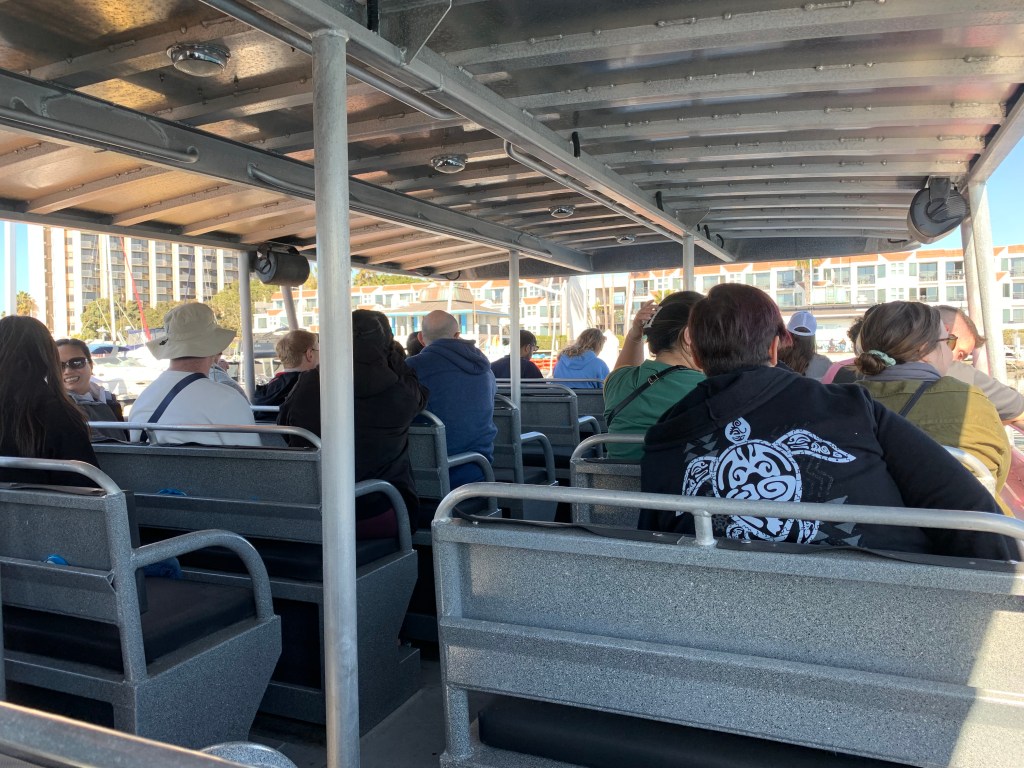
On our day out of San Diegoโ€™s Mission Bay, we boarded one of the fastest vessels on the water, the Hana Hou. Having been whale watching countless times before, and never experiencing anything quite like this, we knew early on this outing was different. This high-speed power catamaran cruises at over 30 mph, covering more ocean and improving sighting chances. We were treated to a few gray whales migrating south, playful dolphins, and sun-bathing sea lions. A vivid reminder of how dynamic and rich these waters can be when conditions align.

Hana Hou Gone Whale Watching Catamaran

But the peaceful picture wasnโ€™t the whole story. As we watched a U.S. Navy warship operating surprisingly close to shore, I had a realization. I thought about the broader pressures whales face. These pressures come not just from nature, but from human activity.


When Sonar Meets Migration: What the Law Says

Whales rely on sound for communication, navigation, feeding, and migration. Yet military sonar, particularly mid-frequency active (MFA) sonar, produces intense underwater noise that can disrupt these behaviors, sometimes with profound consequences. As we watched, the sonar signal we could hear with our human ears was no doubt magnified beneath the ocean, knocking the whales off their migration route and even turning them back north instead of their intended southbound path.

Image of the USS San Diego Navy Ship we witnessed utilizing sonar – DefenseNews.com

Under U.S. law, the Marine Mammal Protection Act (MMPA) and other regulations govern activities that might incidentally impact marine mammals. The National Oceanic and Atmospheric Administration (NOAA) Fisheries issues Incidental Take Authorizations (ITAs), which allow limited and unavoidable harmโ€”such as disturbance or injuryโ€”during training and testing while still requiring measures to minimize those effects.

After witnessing the gray whalesโ€™ confusion firsthand, itโ€™s easy to see why environmental groups have fought for stronger constraints on Navy sonar. In Southern California, legal settlements now prohibit mid-frequency active sonar in key feeding and habitat areas, such as between Santa Catalina and San Nicolas Islands and near San Diegoโ€™s whale feeding grounds.

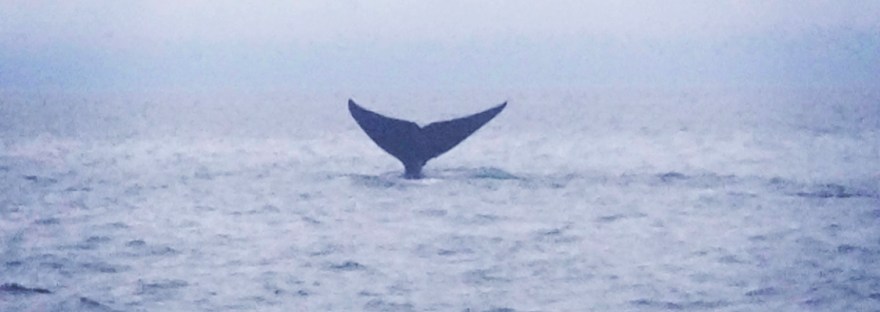
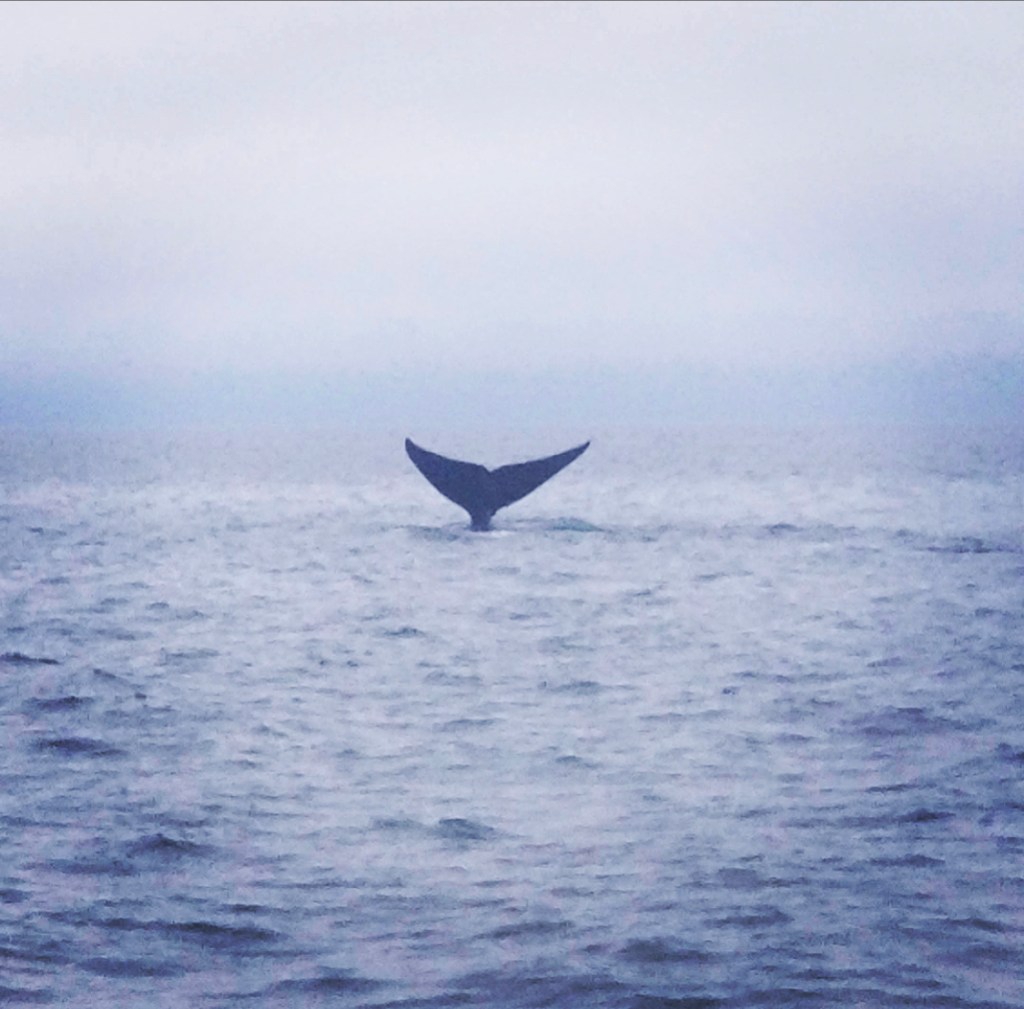
Blue Whale Tail Breaching

Laws Whale Watchers Should Know

Itโ€™s not just Navy sonar that matters. Commercial and recreational boaters are regulated, too. The federal government, through NOAA Fisheries and the MMPA, prohibits actions that harass or disturb marine mammals, including approaching them too closely or causing them to change their natural behavior.

Vessels like the one we were traveling on are generally expected to maintain respectful distances, often hundreds of yards depending on species and location. The vessels avoid pursuing or encircling animals. Once our captain realized the whales were being turned around, we left the area to give them space to return to their intended path. These guidelines are more than etiquette; theyโ€™re enforceable under federal law, and reporting violations can help protect these magnificent creatures.

Gray whales surfacing – Expedition with Gone Whale Watching

Whale & Wildlife Expeditions: Options From Budget to Premium

If youโ€™re planning your own whale watching expedition, whether in San Diego or another coastal destination, thereโ€™s a wide spectrum of tours depending on budget, duration, and how deep you want the experience to be:

  1. Budget-Friendly Voyages ($60โ€“$75)
    City Cruises whale watching tours typically range from $60 to $75 for a standard 2โ€“2.5-hour trip.

TIP: Check other local operators offering short trips. Shorter trips give you a taste of migration without breaking the bank.

2. High-Speed & Small Group Experiences ($60โ€“$110+) Gone Whale Watchingโ€™s Hana Hou offers fast, small-group tours starting around $60, with more intimate encounters thanks to less crowded vessels.

3. Extended & Premium Expeditions ($190โ€“$325)
Longer, 5-hour or extended whale watching and offshore wildlife toursโ€”often during peak blue whale seasonโ€”can cost $190โ€“$325 per person

For a practical checklist to make the most of your whale watching adventure, check out my free downloadable [Fathom the Journey – Whale Watching Exploration Guide below], designed to help you see more, stay safe, and fully enjoy the journey.


Final Thoughts: Whales, Waves, and What We Leave Behind

Whale watching is more than a bucket-list activity. Itโ€™s a front-row seat to the vulnerability and resilience of some of the planetโ€™s most magnificent creatures. Beyond the whale blows, deep dives, and playful dolphins, we get a glimpse of the complex pressures these animals navigate every day.

In Paths & Patterns, I focus on observing these rhythms, whether in whales, birds, or other wildlife that are affected by human activity, to better understand the delicate balance of marine and wildlife ecosystems. On that San Diego day, watching gray whales glide through the Pacific while a Navy ship loomed nearby was a moment of wonder and reflection.

This is more than a single adventure, itโ€™s part of the Fathom the Journey ethos: where every trip is a story, and every experience is an opportunity to connect, reflect, and explore.

Field Notes, Hot Air Ballon Rides, Hot Air Balloon Riding, Hot Air Balloons, Living, Things-to-Do

Rainbow Ryders Hot Air Balloon Ride Field Notes: Before You Book a Hot Air Balloon Ride, Read This

I go scared, figure it out โ€” so you can go with ease.

Hot air ballooning had been on my list for years. Not because it looked peaceful, but because it looked terrifying. My husband refused. His logic? At least one parent should stay on the ground to raise the kids.

Fair.

So I found a friend who trusted my research more than her fear, and we booked the ride with Rainbow Ryders anyway.

My research on the company and safety stats convinced a girlfriend to go along with what I felt was a great idea.

From the moment I booked the ride, with Rainbow Ryders Hot Air Balloon Co. (RR), every human sense was stimulated.

An oversized basket, a giant balloon, fueled with hot-air, thousands of feet in the air, with 12 people inside, could we be any crazier? We were willing to see! I booked the hot-air balloon ride about three weeks out.  You had the choice of a sunrise or sunset ride.  We chose sunset, because getting up before the sun comes up over the horizon and baring the morning coldness was not anyoneโ€™s idea of an enjoyable start to a day.

There was no individual weight limit with RR, but they will ask what the total weight is for the individuals booking in your party.  They placed us in a basket according to the other 10 riders that rode in the same basket with us, to give the balloon an overall safe balance. 

Per RR, there were other requirements that we needed know before we booked our ride, such as being able to get in and out of the basket (similar to getting on and off a horse), standing for three hours, since we did have to stand the entire time, no on balloon seating. Wear comfortable clothes and closed toed shoes.

We checked in one day prior, to confirm our attendance for the next day. We arrived one-hour prior to flight time on the day of the ride to get an assigned basket, pilot, and van.

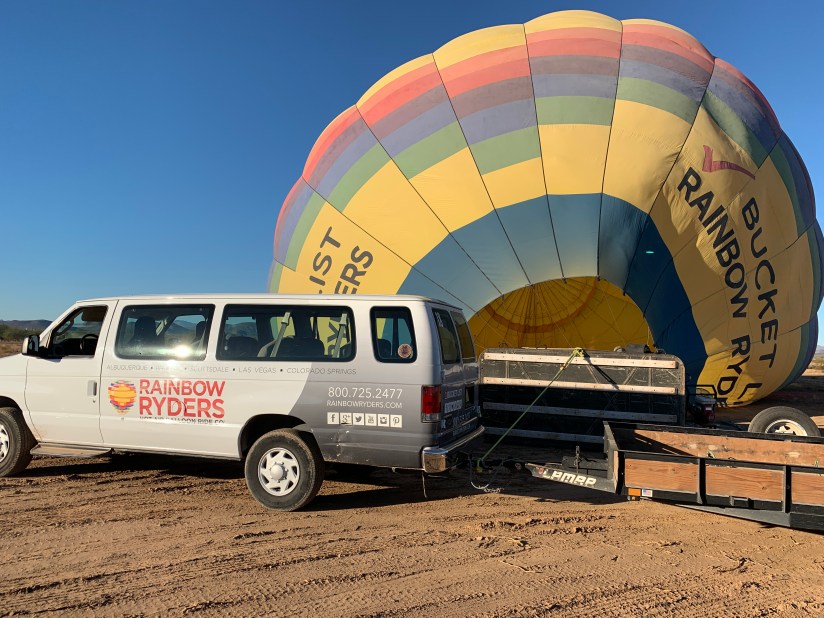
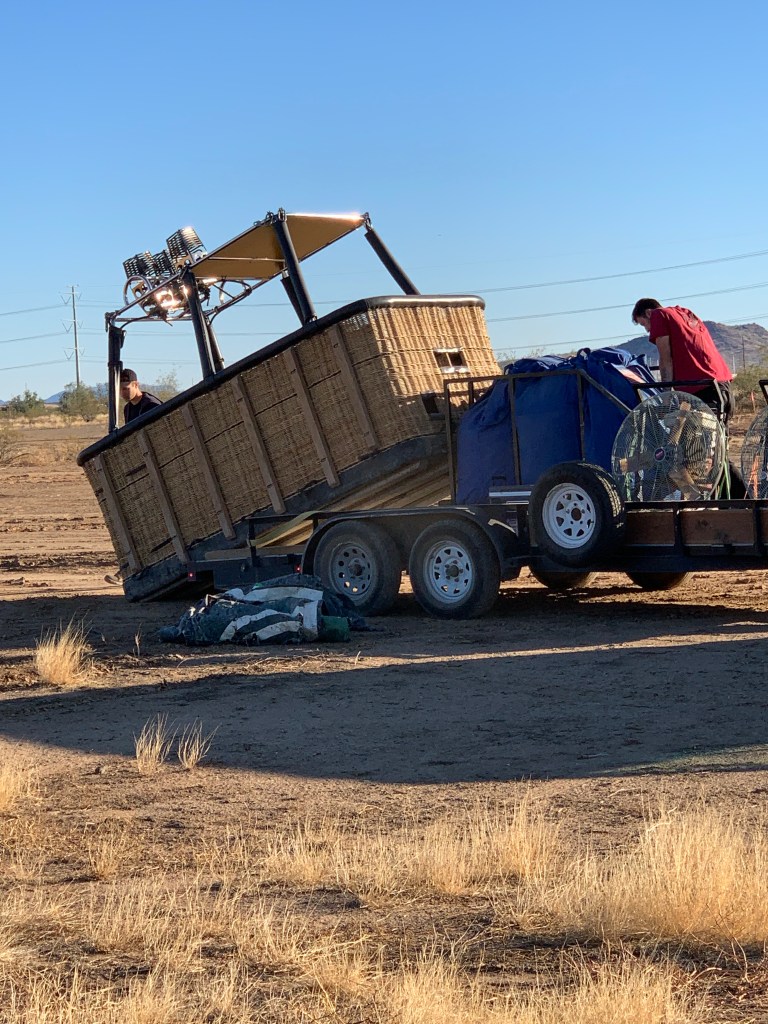
The ride from RR headquarters to the launch-site was about 45 minutes.  Once the balloon chasers located an idea space for take-off, they began set-up.  Set-up took an additional 45 minutes.  We filled the time with a photo-op and observing the process of the crew inflating the balloon. They process is all manual, from pulling the basket out the back of a pick-up, unraveling the balloon to make sure it is flat and ready to be inflated with large fans.

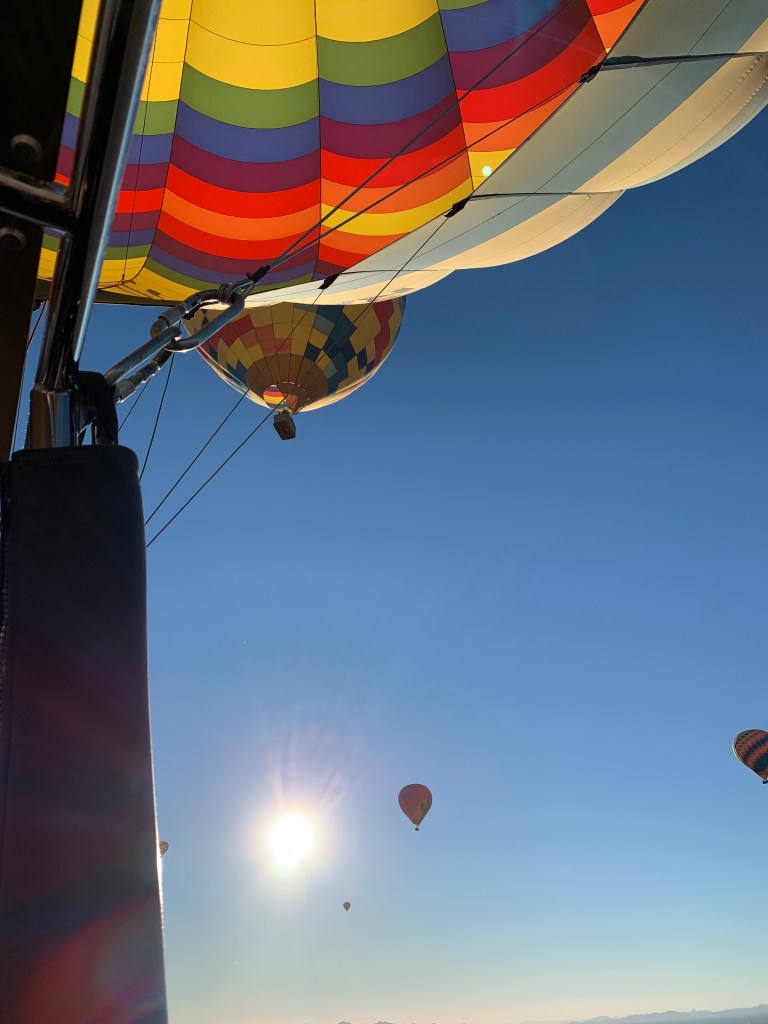
In the air with Rainbow Ryders Hot Air Balloon Co.

Once the logistics were in order, it was time for take-off.  Nail-biting and wonder started to take over. However, the hot-air balloon ride was the most serene, relaxing, and enjoyable time that you can have at approximately 3,000 feet in the air. Surprisingly so quiet, just the sounds of whispering chatter from our balloon neighbors, and the sound of the fire fueling the balloon. Our pilot pointed out some landmarks and gave us some short personal stories about his flying experience over the last 30 years.

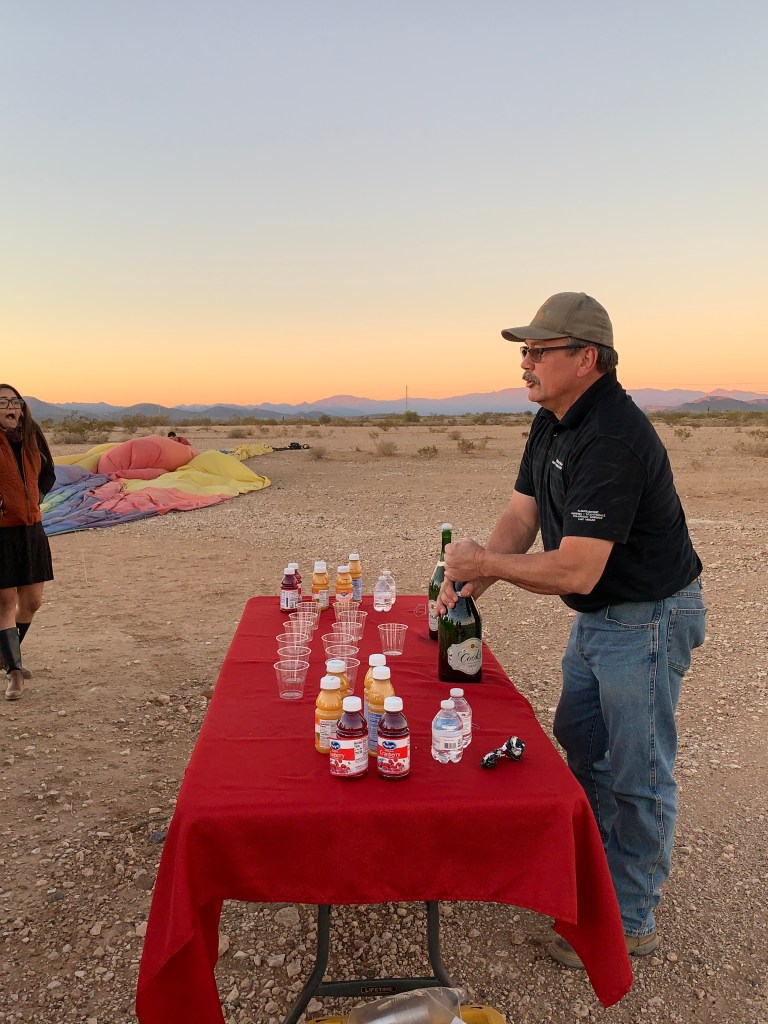
After about one hour and a half in the air, we prepared for landing. Landing was bumpy, but not rough. We skipped a few times, but our basket did not tip over, like we were warned could happen. There are small steps etched on the inside of the basket. We used those to climb to flat ground. We had a or few celebratory glasses of wine, and all the riders received flight certificates. Our balloon chasers met us at the landing site and chauffeured us back to the RR Headquarters. Overall, our experience was 10/10.

And yes, we are a little bit crazier since scratching hot-air ballooning off of our bucket list. Would not have it any other way!

Our total price paid was $390, for two riders, not including tip.

Have you been hot-air ballooning? Who were you able to talk into going with you? Tell me about your experience. If you have not been hot-air ballooning. would you try it?

Location Visited:

Rainbow Ryders Hot Air Balloon Co.
715 E. Covey Lane, #100
Phoenix, Arizona 85024